Riot Games Shaked-up VALORANT Esports with New Partnerships, Evoking Various Responses across the VCT Scene
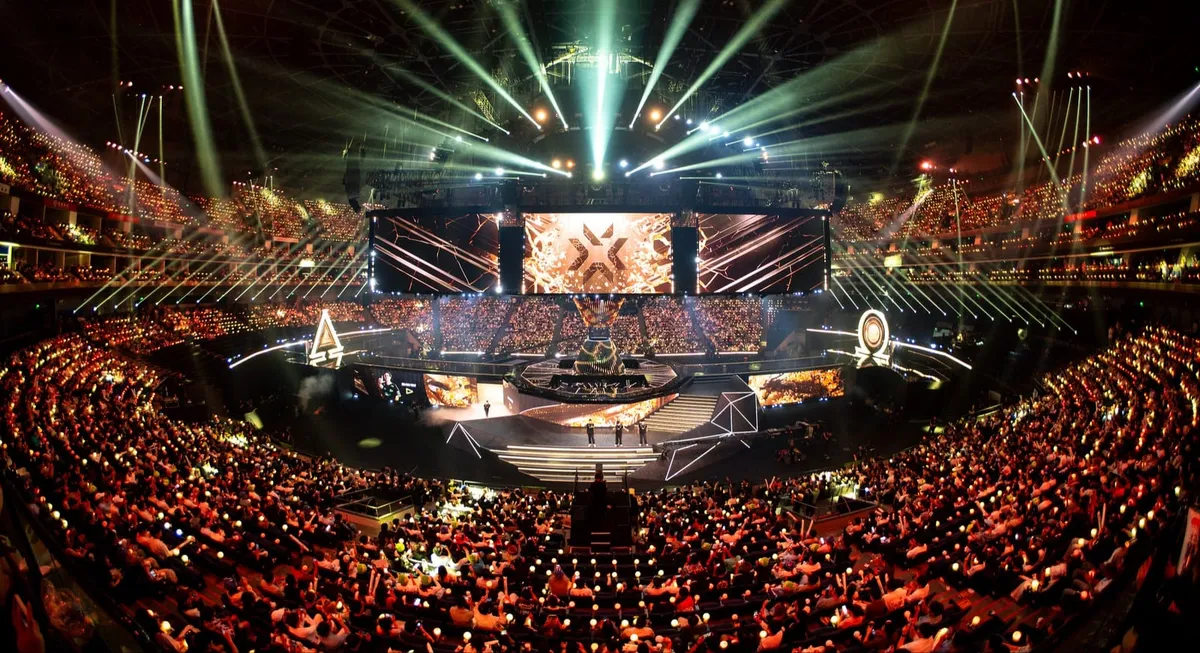
Between October 19 and 23, Riot Games and several esports organisations successively confirmed the 32 partnered teams for the 2027–2028 VALORANT Champions Tour (VCT) partnership cycle. The announcement follows a major overhaul of the competition format announced in April, marking one of the biggest changes to the circuit since 2023.
In 2027, the four major regions — EMEA, the Americas, Pacific and China — will each have 8 partner teams, down from 10 in the current cycle. The 2 slots for Ascension teams will be canceled and replaced by 4 teams from open qualifiers.
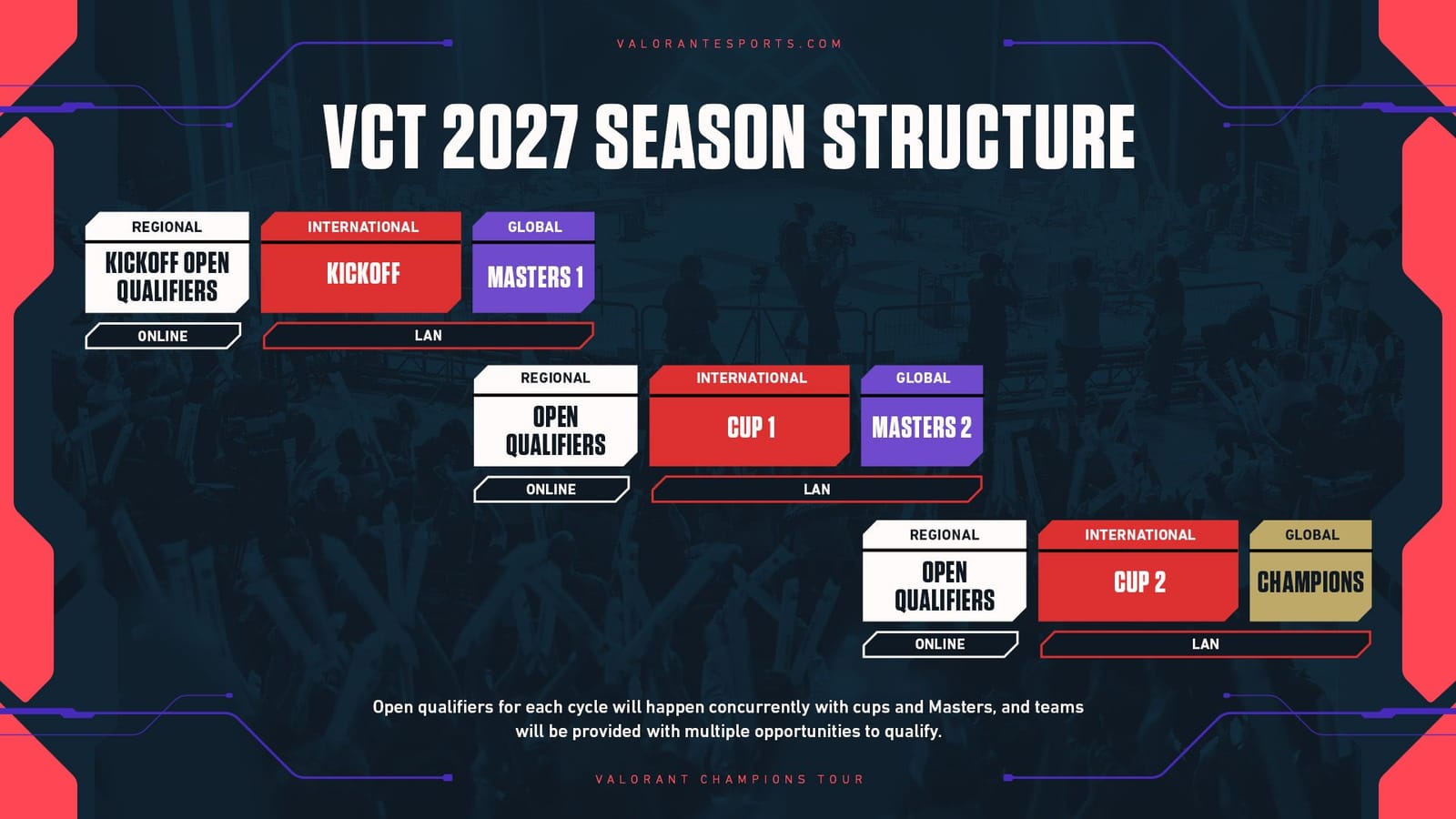
Under the new tournament model, partnered teams will receive direct entry into Kickoff. After Kickoff, they will have to compete alongside and against teams emerging from Open Qualifiers, with competitive performance as the only way to earn a place at Cups, Masters, and Champions. Meanwhile, teams that failed to secure a partnership slot will no longer need to rely on the annual Ascension tournament to break into Tier 1. Instead, they can compete in open qualifiers at each stage for a shot at international and global events.
Securing a partnership slot does not grant huge competitive privileges. However, it will still remain commercially significant. Selected organisations will continue to receive financial support from Riot and a share of revenue from in-game digital goods. For teams that miss out, the challenge will be to remain competitive without the same level of financial security.
The decisions have already prompted various reactions from organisations. While selected teams are celebrating the partnership, others remain uncertain about their future in VCT.
Partnership matters, a lot
Although Riot is opening more routes into the VCT, partnership remains an important source of financial support for professional organisations.
During the current two-year cycle, partner teams receive annual payments, tournament prize pool cuts, over-performance marketing incentives, and revenue sharing from in-game digital goods. These benefits can help organisations cover player salaries, coaching staff, travel and other operating costs.
The financial support from Riot is a multi-million-dollar business. The publisher's own figures illustrate the scale of the ecosystem: In its 2024 season review, it shared $78.4 million with VCT teams, and $44.3 million of that money was from digital goods. In its 2025 season review, Riot reported $105.2 million in total team distributions, with more than $86 million coming from digital goods.
The 2026 Champions collection provided another indication of the commercial potential. Riot allocates 50% of its net proceeds to participating teams. On October 15, Riot announced that the collection had generated $10000 million for the game publisher, with $5000 million contributing to the teams. The collection launched on 22 September, meaning the figure was reached in less than a month.
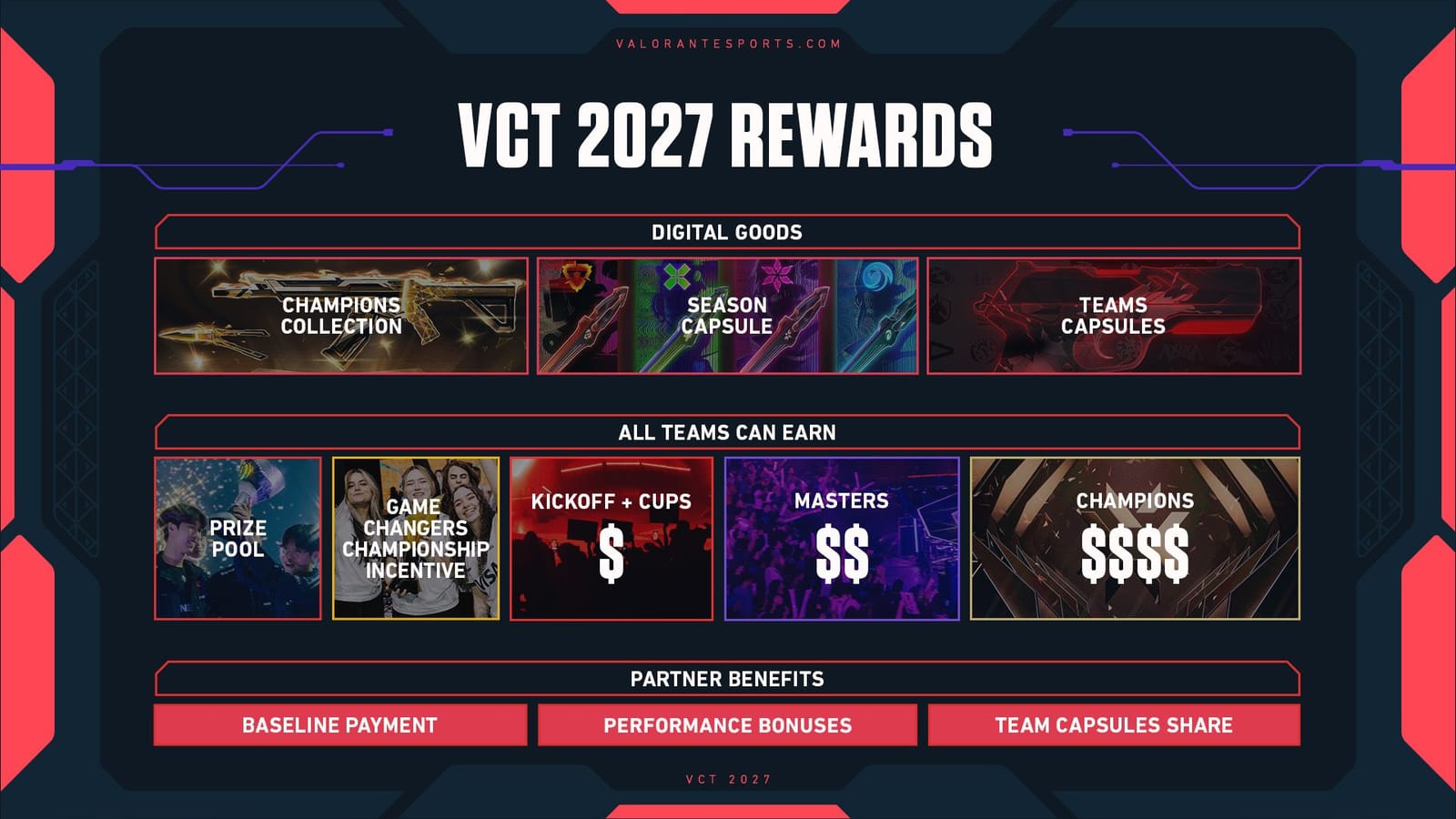
Heading into the 2027-2028 cycle, partnered teams will continue to receive fixed subsidies, performance bonuses, and revenue shares from team capsule sales. Though Riot has not published a complete breakdown of the financial terms for every region, THESPIKE.GG reported in April that annual payments for partner teams in North America, Latin America and Brazil could range from $600,000 to $5 million, depending on competitive results and digital goods sales.
In June, Riot also announced fixed qualification payments for non-partner teams in 2027:
- US$100,000 for qualifying for Kickoff or a Cup;
- US$200,000 for qualifying for Masters;
- US$400,000 for qualifying for Champions.
These payments are tied to qualification, rather than being unconditional annual grants. For established organisations, the decision to invest in VALORANT will therefore depend on more than the chance of reaching an international tournament. Predictable income, the ability to retain players and the prospect of a sustainable return will remain central considerations.
Shuffling the deck: who in, who out
The 2027–2028 partnership roster includes 3 notable additions compared with the previous cycle: Crazy Raccoon (Japan), GAM Esports (Vietnam), and Weibo Gaming (China). Meanwhile, all partner teams across the Americas and EMEA regions were VCT teams from the 2026 season.
The double slots for Turkey and Brazil, as well as the new inclusion of Vietnam, potentially indicate Riot's interest in these emerging esports markets.
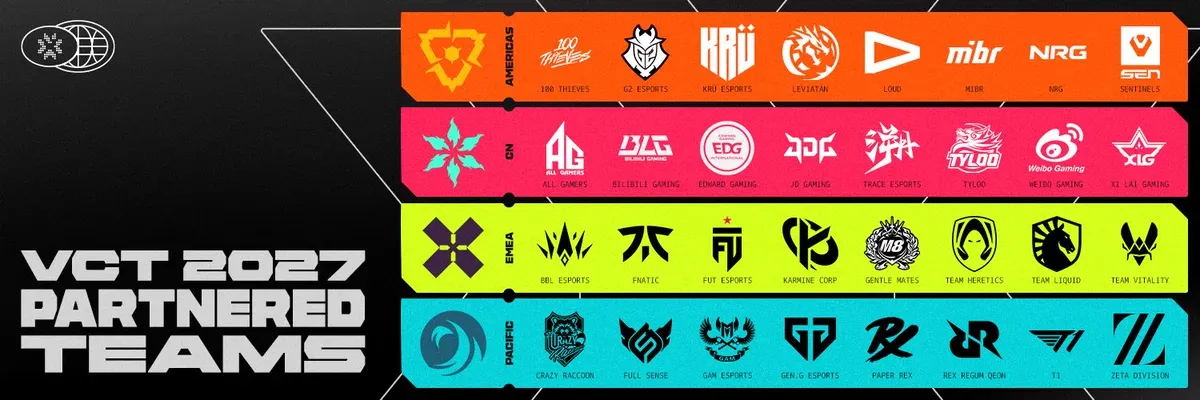
The new partnership roster also leaves out 16 VCT teams from the 2026 season:
- In the Americas, Cloud9, Evil Geniuses, FURIA and ENVY (Ascension team) will not appear among the new partners.
- NAVI, GIANTX and Eternal Fire (Ascension team) from the EMEA region failed to make the new partnership roster.
- Chinese organisations FunPlus Phoenix, Wolves Esports, NOVA Esports, Titan Esports Club and Dragon Ranger Gaming (Ascension team) will miss out on the partnership.
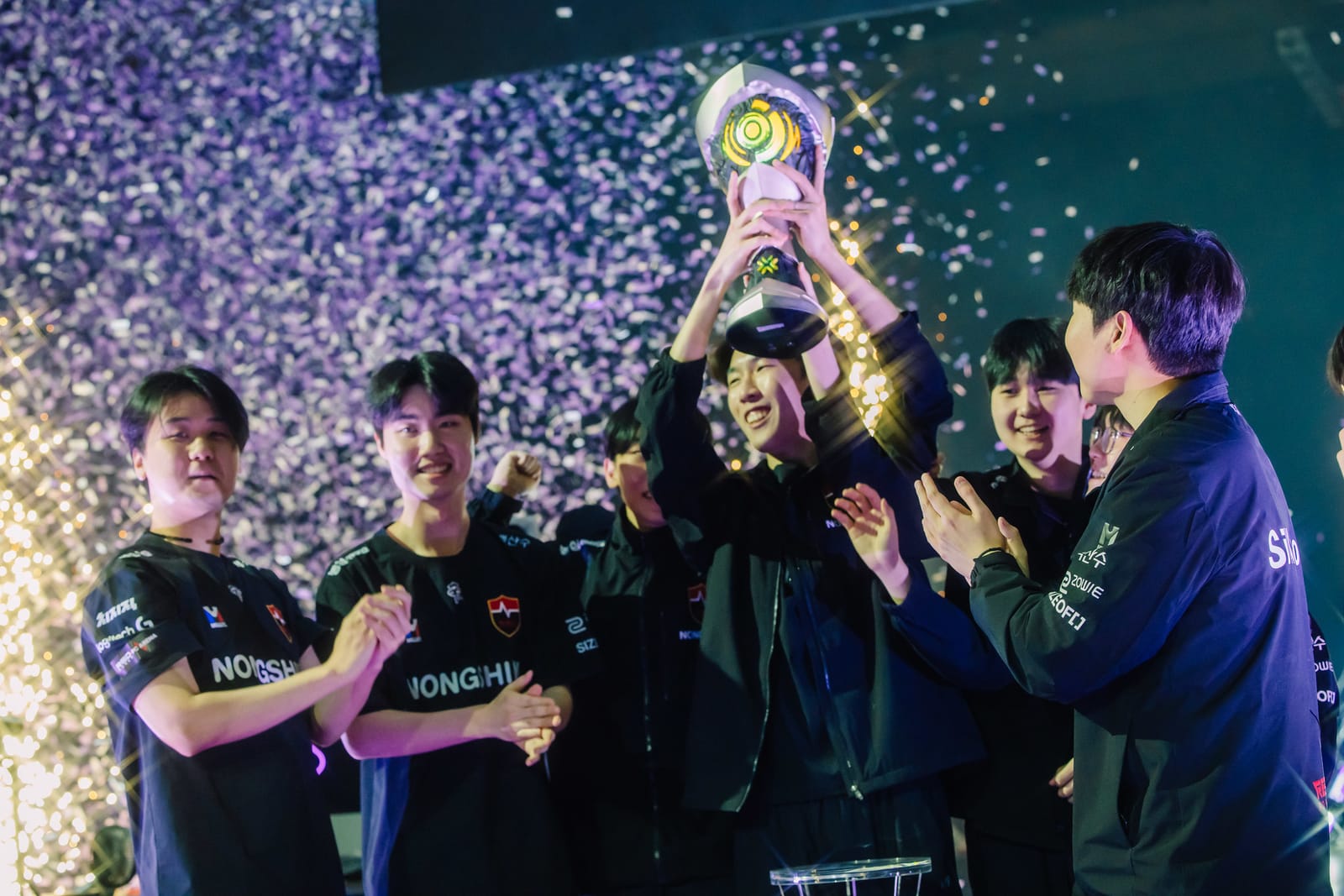
- Pacific has also seen significant changes, with DetonatioN FocusMe, KIWOOM DRX, Global Esports, Team Secret, alongside two Ascension teams VARREL and Nongshim RedForce will be left out.
The aftermath for unsecured teams
Most unsuccessful partnership applicants have yet to clarify the future of their VALORANT rosters. Nevertheless, several organisations have confirmed that they will continue competing in the VCT circuit, including Cloud9, Eternal Fire, DRX, and Nongshim RedForce. NAVI, according to THESPIKE.GG, intends to continue their VALORANT journey through their academy project NAVI Junior. The new format gives these organisations a route back into top-tier competition, although they will need to earn their place through results rather than relying on partner status.
Barça eSports, which has competed in the EMEA VALORANT Challengers League (VCL) since 2024, has also indicated that they intend to remain involved in the ecosystem. Their absence from the partner roster does not prevent them from entering open qualifiers and pursuing places at major events.
However, other organisations have pulled the plug.
On October 19, Rushindra Sinha, founder and CEO of Indian organisation Global Esports, announced that the company would stop its esports operations, shifting its focus to GE Studios and artificial intelligence. Tier 2 teams S8UL Esports, RIDDLE ORDER and LYON have also decided to step away from VALORANT esports after missing out on partnership.
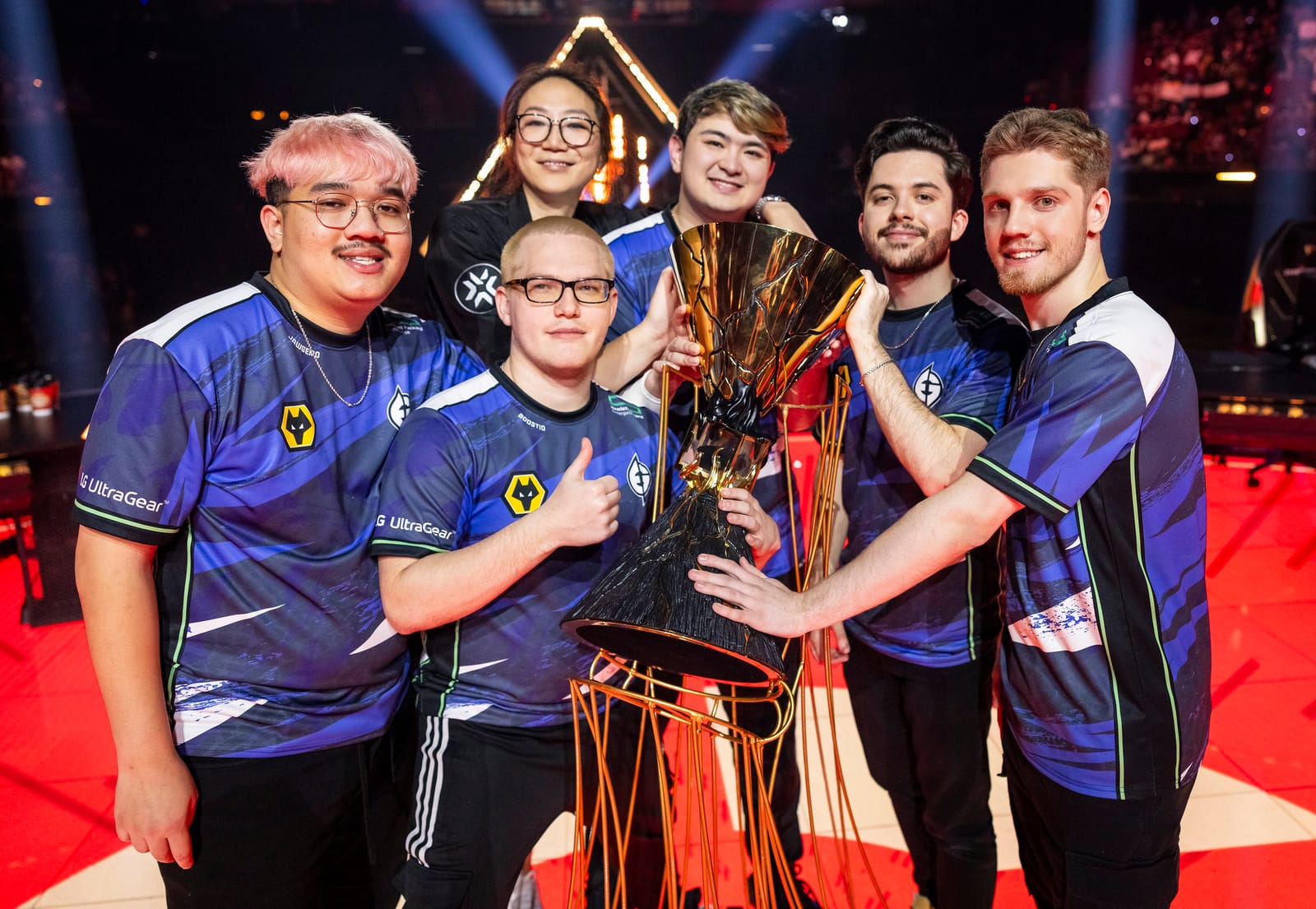
The most significant closure is that of Evil Geniuses, one of North America's longest-running esports organisations with a 29-year history. On October 20, CEO Chris DeAppolonio announced that the organisation would cease competitive and day-to-day operations on 2 November 2026, the day the 2026 VCT season ends.
In the statement published on social media, DeAppolonio suggested that limited sponsorship and the rising cost of competing at the top level were the main reasons behind this decision. "Despite sustained investment and the dedication of the EG team, it's been concluded that the business cannot be operated responsibly in the current environment."
This also means that every EG player on every roster was allowed to explore new opportunities from then on. All VALORANT players and coaches will become free agents when the 2026 VCT season ends on November 2.
Rising tensions and financial realities
Naturally, amid these changes, several organisations that failed to secure a place have voiced strong criticism of Riot's partnership selection.
Ludwig Ahgren, co-owner of the North American organisation Shopify Rebellion, delivered one of the strongest public responses after learning that the organisation had not secured a partnership slot. During a stream on October 19, he stated: "I think that Shopify Rebellion should abandon VALORANT completely, and I think Riot Games has fucked us long enough, and I don't know if I wanna pursue it anymore, because I see no reward for doing so." Unlike partnered teams, non-partnered organisations lack Riot's annual financial backing and digital merchandise revenue sharing, placing them at a severe disadvantage in player salary negotiations and making it difficult to retain top talent. Ahgren pointed to the departure of SR players Brock "brawk" Somerhalder and Adam "mada" Pampuch to NRG as a prime example of his concerns.
Marco Mereu, founder and CEO of North American organisation M80, echoed Ahgren's sentiments on October 20, noting: "To support a Valorant Challengers team like the 2026 M80 roster which won NA would be approximately $500k annually, give or take. That's 5 players, 1 HC and 1 AC/Analyst on monthly salaries + travel expenses." Mereu further emphasised that under the new system, if a non-partnered team misses a cup or a Masters tournament, the financial risk can easily lead to severe losses, and slashing salaries could turn into a race to the bottom rather than a healthy professional ecosystem. In subsequent comments of his post, he also suggested M80 is not likely to compete in the next VCT season.
LATAM North representative LYON has missed out on partnership for two consecutive cycles. On October 23, the organisation confirmed that they will not compete in the 2027 season due to the new partnership model, in which non-partnered teams bear 100% of the risk. According to a report by Sheep Esports, Emmanuel Neyra, the organisation's head of VALORANT, expressed enormous disappointment with the fact that Riot has decided not to grant LYON a VCT partner slot for a second time. With LYON's exclusion, the Americas partnership roster has no direct representation from Latin America North, and Neyra has expressed his concern that the lack of structural guarantees for Latin America North could widen the gap between northern and southern Latin America.
Eintracht Frankfurt also applied for a partnership slot but was not selected. The German football club made a Cinderella run through the VCT EMEA Stage 2 Play-Ins via the Last Chance Qualifier in 2026, sweeping Gentle Mates, Team Heretics, and Eternal Fire to secure a spot in the Playoffs. The organisation's VALORANT lead, Max Bromel, acknowledged that Riot had commercial reasons for choosing its eight EMEA partners. However, he questioned why Germany, one of Europe's largest markets, had no direct representation in the new partnership roster. Despite this, Eintracht Frankfurt still plans to compete in the upcoming season, having already extended Luca "azury" Sammer and Alessio "musashi" Xhaferi's contracts through 2027.
What do these changes mean for the VALORANT ecosystem?
For the game publisher, the core criterion in selecting partnered teams is an organisation's ability to drive digital merchandise sales. In turn, Riot allows a significant portion of that digital revenue flows back to the organisations, creating a mutually beneficial ecosystem.
This mechanism encourages organisations to put heavy investment into VALORANT, potentially leading some clubs to pivot their entire business models around the title. Barça eSports, for example, has already announced their departure from League of Legends, making VALORANT the only title the organisation maintains operation. Whether this shift will become a paradigm and trigger further competition among other esports titles and game publishers is a trend worth watching closely.
On the flip side, however, massive subsidies drastically widen the operating cost gap between partnered and non-partnered teams. For organisations locked out of partnership, fielding a competitive roster against partnered giants without financial cushioning will become exceptionally difficult. Without sustainable returns, their investments risk turning into unrecoverable sunk costs. If non-partner organisations cannot retain their players or recover their operating costs, the number of teams willing to invest in the ecosystem could decline. If economic pressures force more teams to abandon VALORANT altogether, it may threaten the broader health of the VCT ecosystem.
The new format and partnership represent Riot's attempt to balance commercial stability and competitive access. Nevertheless, an open competitive system doesn't guarantee financial sustainability. The success of Riot's new VCT framework will depend on whether both partner and non-partner teams can find a viable reason to keep investing in the game.