Microsoft Excel Esports: The Spreadsheet World Championship That Redefines Competitive Gaming

When most people hear the word esports, they think of competitive shooters, MOBAs, fighting games, or racing titles. Microsoft Excel is probably one of the last applications that comes to mind.
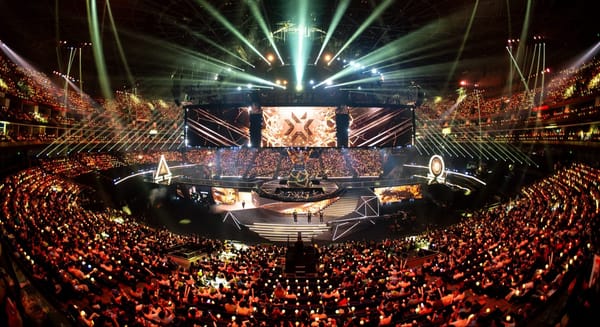
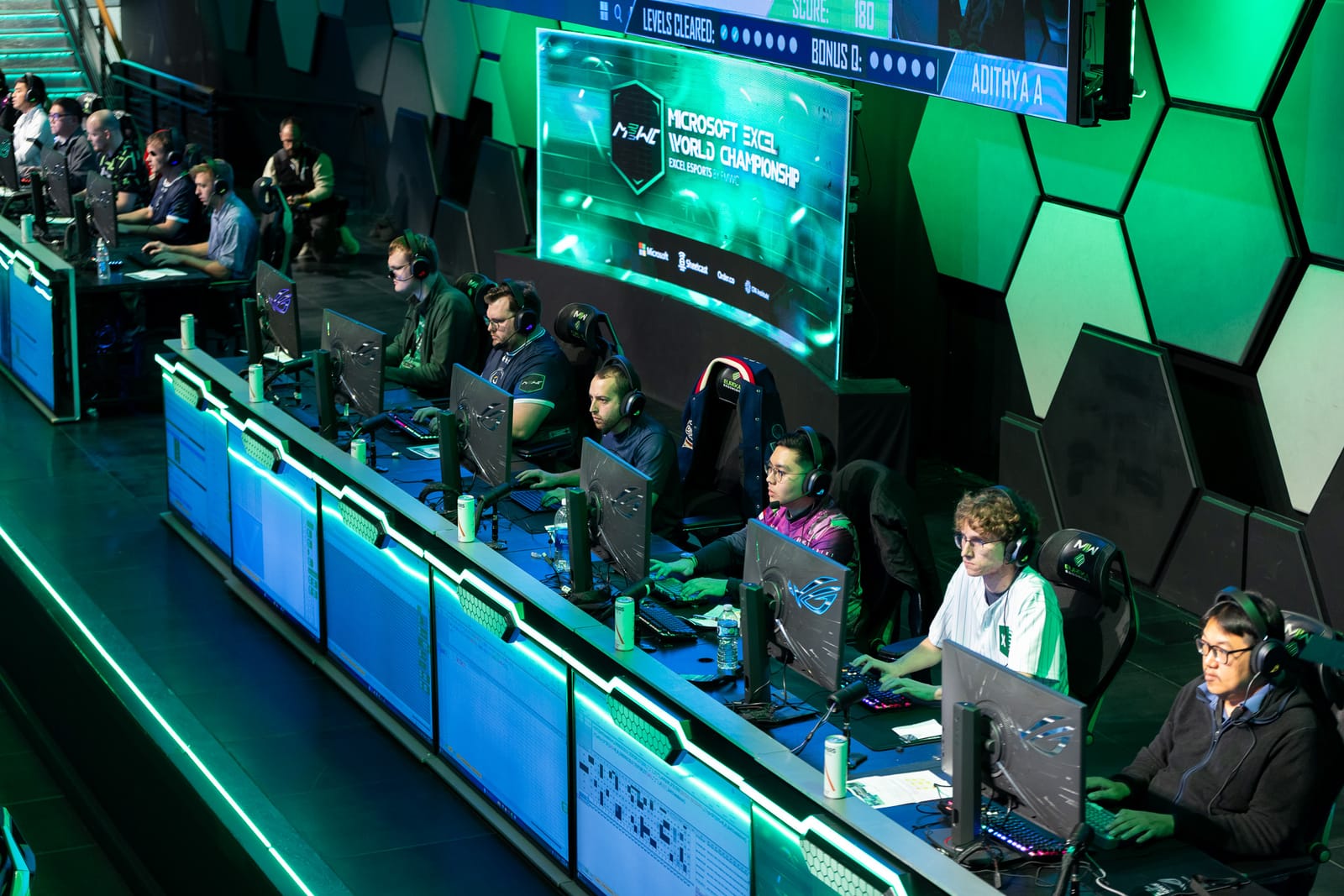
Yet Excel has quietly developed its own competitive ecosystem. The Microsoft Excel World Championship (MEWC) now brings elite spreadsheet users to the HyperX Arena in Las Vegas, complete with live spectators, professional commentary, theatrical player entrances, and ESPN8 The Ocho broadcasts. The 2026 edition is scheduled for November 30 to December 2, with a $100,000 prize pool.
For traditional esports audiences, the tournament can initially look like a different approach. The competition itself, however, is highly structured. Players are solving difficult problems against the clock, while the organisers have spent years developing a presentation format that turns the underlying technical skill into something a wider audience can follow.
That makes the Excel World Championship interesting for the esports industry for a reason that goes beyond the novelty of watching people use spreadsheets. It raises a broader question: does an esport necessarily need to be built around a traditional video game?
What Exactly Is Excel Esports?
At its core, Excel esports is a competition built around problem-solving, logical thinking, and speed.
The Financial Modeling World Cup, which organises the Microsoft Excel World Championship, describes Excel Esports as a competition in which participants solve unusual game tasks inside Microsoft Excel. Unlike its traditional Financial Modeling World Cup, the Excel esports cases do not require specialist financial knowledge. The focus is on logic and the ability to use Excel's functions and tools efficiently.
Each case is designed to be completed under extreme time pressure. Current regional qualification rounds give competitors 30 minutes to solve one Excel Esports case, with the highest-scoring players progressing through the qualification system. The 2026 global championship builds towards an in-person Las Vegas final at the HyperX Arena.
The cases are also deliberately designed to avoid making the competition look like a conventional accounting examination. Previous challenges have included game-like scenarios and problems based on maps, data manipulation, and even simulations. One 2024 case was titled “World of Warcraft”, despite being entirely built within Excel. It required no specific financial knowledge and was designed to be solved within 30 minutes.
The competitive element is therefore relatively easy to understand. Players have the same problem, the same time limit, and a scoring system that rewards both accuracy and efficient execution.
Why Watch Excel Esports?
The difficult question is why anyone would want to watch it, and the answer lies entirely in the presentation. The arena format gives spectators a live scoreboard and large screens showing exactly what the competitors are doing, while expert commentary explains the decisions being made as players race against the clock. The result is closer to watching a thrilling, timed puzzle competition than simply watching someone work on a spreadsheet.
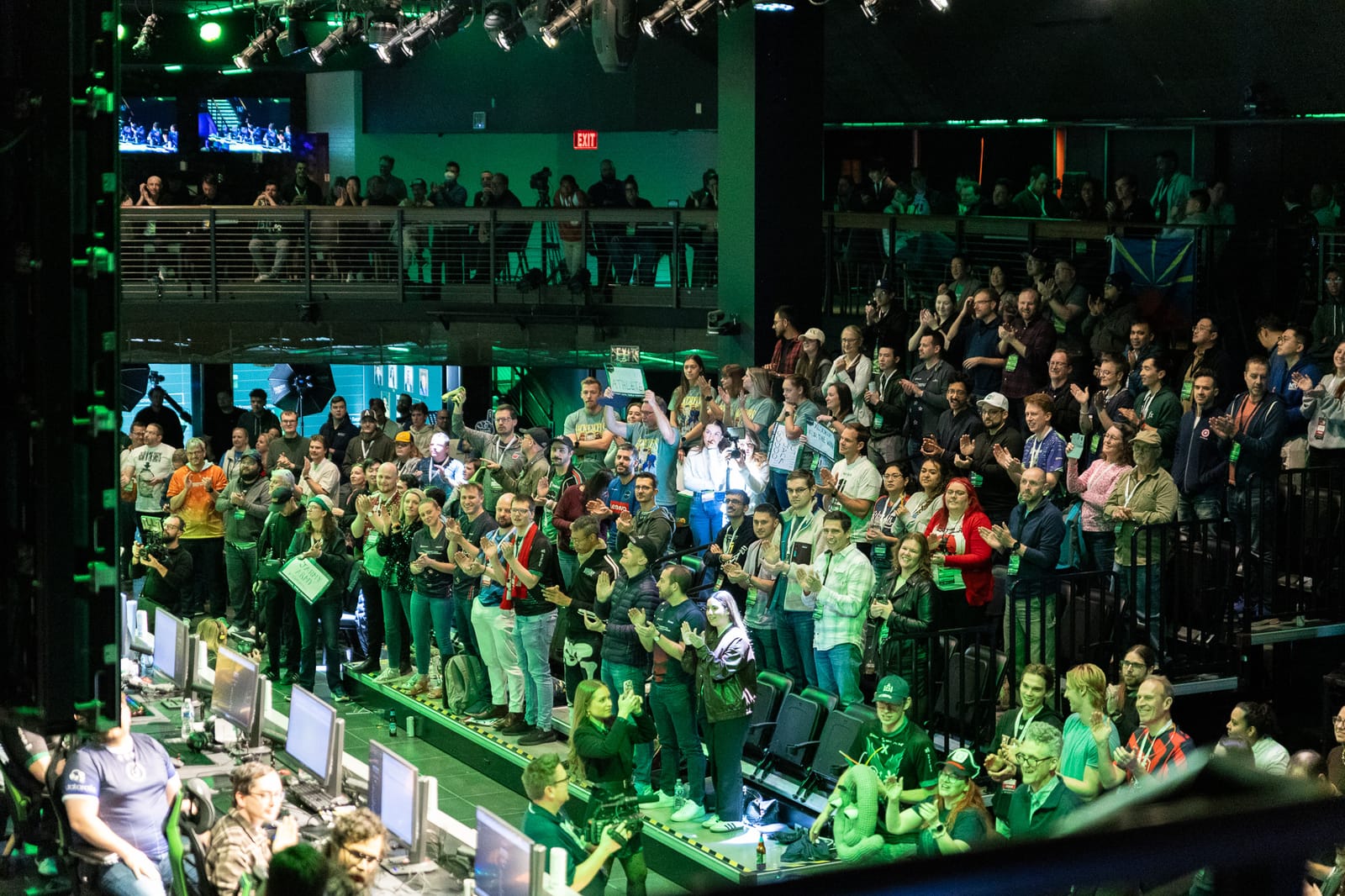
The organisers began deliberately pushing the event in this direction after recognising that a technically impressive competition would still struggle as a spectator product without strong presentation. FMWC says its 2021 productions were an important step towards what became the modern Excel esports format. Before ESPN's ESPN8 The Ocho channel picked up its competitions, the event moved to a live Las Vegas setting in 2023.
Who Is Behind the Competition?
The organisation behind the tournament is the Financial Modeling World Cup (FMWC), founded by Andrew Grigolyunovich.
The FMWC itself began in 2020. Grigolyunovich, a financial modelling professional, initially wanted to create a way for people preparing for advanced financial modelling qualifications to practise through structured cases. The idea gradually evolved into a global competition inspired partly by other intellectual competitions, including Sudoku.
That history explains why Excel competition started with a professional and educational foundation rather than a conventional gaming background.Over time, the organisation separated two ideas that are related but not identical. The Financial Modeling World Cup focuses on professional financial modelling, while the Microsoft Excel World Championship uses Excel as the platform for broader logic and problem-solving competitions.
While the event is planned and operated independently by the FMWC, Microsoft's direct involvement heavily legitimizes the competition. Microsoft provides official authorization and sponsorship support to brand the tournament under the official "Microsoft Excel World Championship" title.
This core backing is supplemented by corporate sponsors like Sheetcast, Datarails, and SoftwareOne, further cementing the competition's formal industry standing.
The ecosystem has also expanded into education. The Microsoft Excel Collegiate Challenge (MECC) now has more than 14,000 students from more than 140 countries and territories participating, according to the programme's current figures.
This is important because it shows that Excel esports is not simply a single annual exhibition. There is an expanding pipeline connecting students, professionals, online competitors, regional championships and the global finals.
Where Do the Competitors and Audience Come From?
The competitor pool is increasingly international.
The 2025 MEWC used online qualification rounds across Africa, Asia-Pacific, Europe, North America and South/Latin America, before bringing the leading players to Las Vegas. The 2025 main draw expanded to 256 competitors, while the live finals brought the top 24 players together from countries including Ireland, Australia, Germany, the United Kingdom, Chile and the United States.
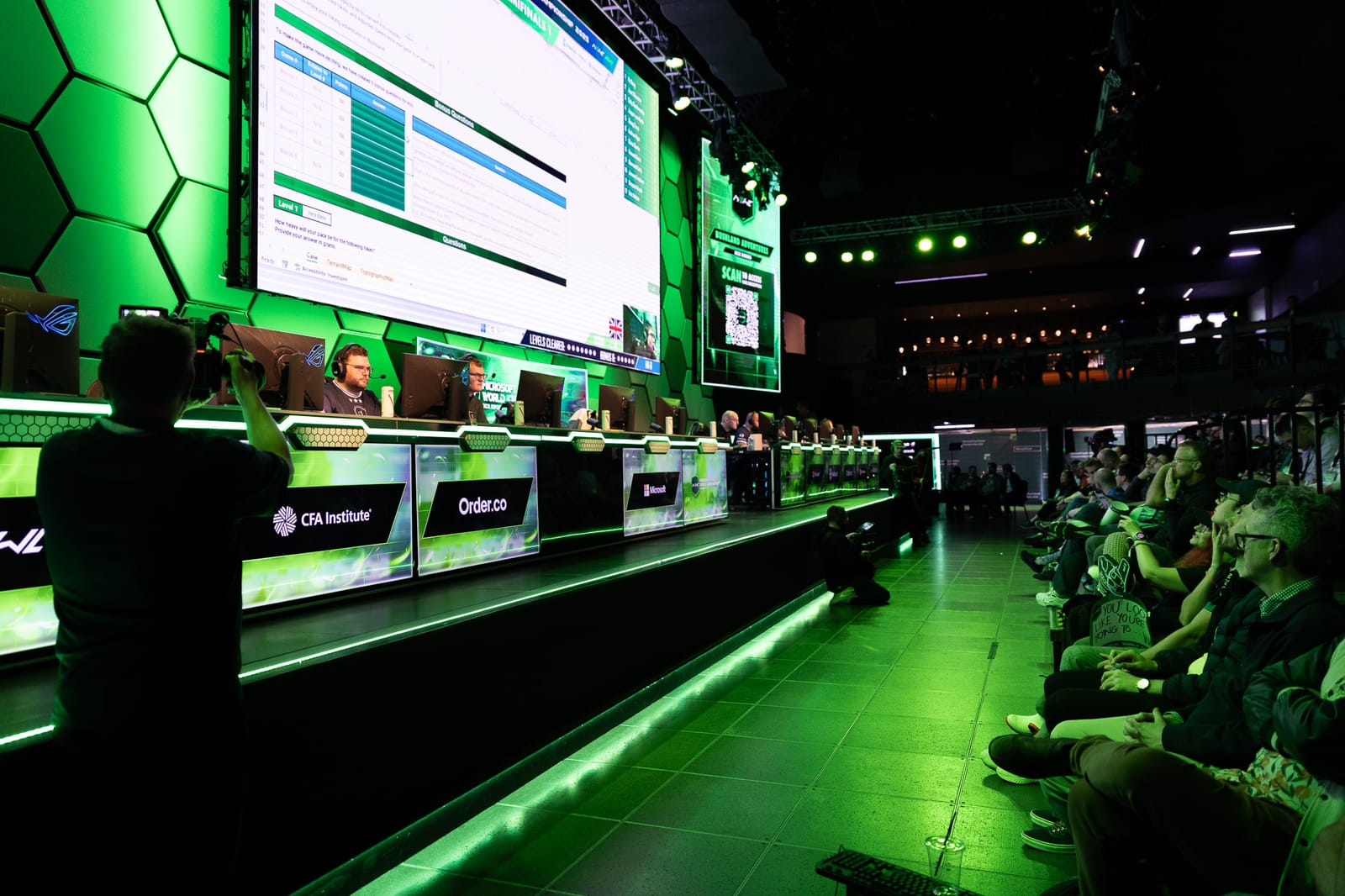
The wider Excel esports community is even larger. The collegiate competition has participants from more than 140 countries and territories, while regional competitions are now being organised in places such as Singapore, Chile and the United States.
The spectator base is harder to measure geographically because the organisers do not appear to publish a detailed country-by-country audience breakdown. What is clear is that the event has moved well beyond a small professional niche.
The live finals attract hundreds of spectators inside the HyperX Arena, while the competition is distributed through online broadcasts and ESPN8 The Ocho. Microsoft described the event as having a surprisingly large fan base, while commentator Giles Male called the atmosphere “bonkers” and highlighted how unusual it is to see people treating Excel competitors as esports athletes.
Independent coverage has been similarly surprised by the format. PC Gamer described the 2025 production as going “way, way harder” than necessary with wrestling-style entrances, while still recognising that the spectacle worked.
Another useful example comes from the 2024 championship. The Financial Modeling World Cup reported a crowd reaction so strong that spectators were cheering during the final seconds of the competition, while Australia's SBS described the arena atmosphere as lively and the audience as genuinely engaged with the competitors' work.
That reaction is important. The audience is not necessarily watching because they are passionate about spreadsheets. They are watching because the production turns technical skill, time pressure, and uncertainty into a recognisable competitive narrative.
What Excel Esports Tells the Wider Esports Industry
The biggest lesson from the MEWC is that esports should not be limited solely to traditional video game competitions. Many interesting intellectual activities, when adapted and properly structured, can develop into standardized esports tournaments.
Excel has several characteristics that make this possible: it is widely known, the skill ceiling is extremely high, the results can be objectively measured, and the challenges can be designed so that viewers understand the basic objective even without mastering the software themselves.
Chess provides another useful comparison.In recent years, online chess has increasingly adopted esports-style production, with digital broadcasts, fast time controls, professional streaming, and entertainment-focused commentary. The trend reached another level when chess joined the Esports World Cup in 2025, with 16 elite players competing for a $1.5 million prize pool. Magnus Carlsen won the inaugural edition after defeating Alireza Firouzja in the final. Chess returned to the event in 2026, again with a $1.5 million prize pool, where Magnus Carlsen defended his title.

Neither Excel nor chess is a conventional multiplayer video game. Yet both can work within an esports environment because the underlying ingredients are familiar: elite skill, clear competition, time pressure, personalities, spectatorship, and strong broadcast production.
For the wider esports industry, this opens another area of exploration. The opportunity is not just in finding the next major shooter or MOBA, but in identifying everyday digital activities where skill can be standardized and competition structured for an audience. As demonstrated by Excel and chess, esports is ultimately a flexible format for presenting competitive skill, rather than a rigid category restricted to conventional video games.